Muscle After 50: Why Sarcopenia Is Your #1 Enemy
The Silent Epidemic Stealing Your Independence After 50
Maria, 58, noticed it first when she couldn’t carry her groceries up the stairs without stopping. Tom, 62, realized he was avoiding playing with his grandkids because his legs felt weak. Linda, 55, struggled to open jars she’d handled easily just a few years before.
None of them knew they were experiencing sarcopenia—the age-related loss of muscle mass, strength, and function that affects up to 30% of adults over 50 and nearly 50% of those over 80. But here’s what most people don’t realize: sarcopenia isn’t inevitable, and it’s far more reversible than you’ve been told.
While everyone’s talking about biomarkers and longevity drugs, muscle loss is quietly becoming the #1 predictor of whether you’ll spend your later years traveling the world or struggling to get out of a chair. The good news? You have more control over this than you think.
What Exactly Is Sarcopenia (And Why Should You Care)?
Sarcopenia comes from the Greek words “sarx” (flesh) and “penia” (poverty). It’s not just about looking less toned in the mirror—it’s a progressive condition where you lose 3-8% of muscle mass per decade after age 30, accelerating to 1-2% per year after 50 if you’re inactive.
But muscle isn’t just for aesthetics. It’s your metabolic engine, your insulin regulator, your balance system, and your insurance policy against frailty. When muscle declines, everything else follows: metabolism slows, blood sugar becomes harder to control, fall risk increases, and independence slips away.
A 2025 systematic review published in BMC Musculoskeletal Disorders analyzed nine randomized controlled trials and found something remarkable: older adults who combined resistance training with amino acid supplementation saw significant improvements in handgrip strength (69% improvement), gait speed (64% faster), and physical performance scores. Even more encouraging? These gains happened in people already diagnosed with sarcopenia—meaning it’s never too late to start.
The Four Pillars of Muscle Preservation After 50
1. Resistance Training: Non-Negotiable
Here’s the hard truth: walking, yoga, and swimming alone won’t cut it. Your muscles need progressive overload—the gradual increase of stress placed on your body during exercise—to signal growth and maintenance.
A November 2025 meta-analysis in Aging Clinical and Experimental Research reviewed 24 studies with 951 participants and identified the optimal resistance training prescription for sarcopenia:
- Frequency: 2-3 sessions per week minimum
- Intensity: Moderate to vigorous (60-80% of your one-rep max)
- Type: Compound movements (squats, deadlifts, presses, rows)
- Volume: At least 600 MET-min/week for meaningful results, with optimal benefits at 1,220 MET-min/week
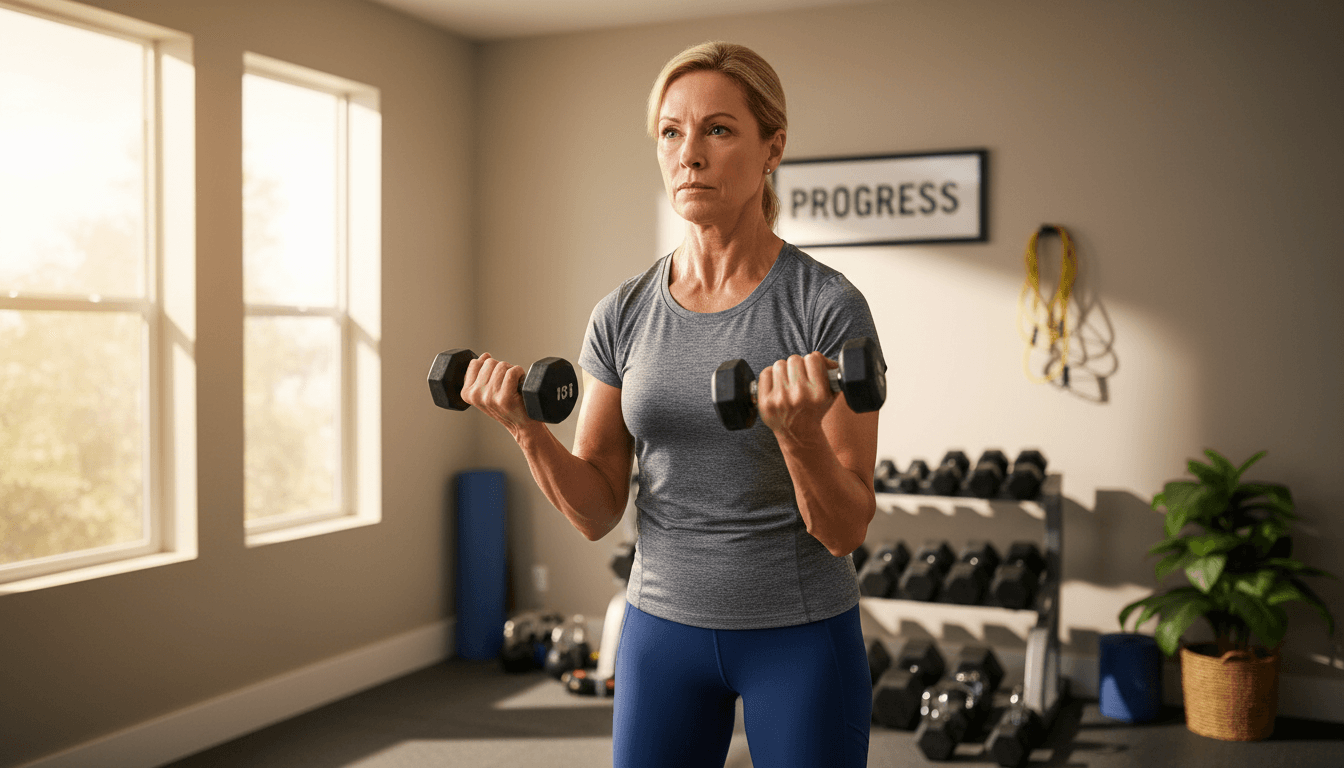
Translation? You need to lift weights that feel challenging by the last rep. Bodyweight exercises work if they’re progressed properly, but most adults over 50 benefit from actual resistance—dumbbells, resistance bands, or machines.
Mike, 61, started with just two 30-minute sessions per week using resistance bands. Within 12 weeks, his grip strength improved enough to carry his luggage without asking for help. Six months in, he was doing goblet squats with a 35-pound kettlebell and hiking trails he’d avoided for years.
2. Protein Intake: The Anabolic Threshold
As we age, our bodies become less efficient at using protein—a phenomenon called “anabolic resistance.” That means the protein intake that kept you muscular at 30 won’t cut it at 55.
Current research suggests adults over 50 need 1.2-1.6 grams of protein per kilogram of body weight daily. For a 180-pound man, that’s 98-131 grams per day. For a 140-pound woman, that’s 76-102 grams. Most adults over 50 consume barely half of this.
But timing matters as much as总量. A study published in GeroScience (September 2025) found that older women who distributed protein evenly across meals—aiming for 30-40 grams per meal—saw better muscle protein synthesis than those who consumed most of their protein at dinner.
Practical strategy:
- Breakfast: Greek yogurt + whey protein + nuts (35g protein)
- Lunch: Chicken breast + quinoa + vegetables (40g protein)
- Dinner: Salmon + sweet potato + broccoli (35g protein)
Quality counts too. Leucine-rich proteins (whey, eggs, fish, poultry) trigger muscle protein synthesis more effectively than plant-based sources alone. If you’re vegetarian or vegan, combining legumes with grains and considering leucine supplementation can help bridge the gap.
3. The Supplement Stack That Actually Works
Not all supplements are created equal, but three have solid evidence for sarcopenia prevention:
Creatine Monohydrate (3-5g daily): Multiple studies show creatine enhances muscle mass, strength, and power output in older adults, especially when combined with resistance training. It also supports bone density and cognitive function—two other aging concerns.
Essential Amino Acids (EAAs) or HMB: A January 2026 meta-analysis found that combining resistance training with amino acid supplementation (particularly EAAs, BCAAs, leucine, or HMB) significantly improved strength and physical function beyond training alone. HMB (beta-hydroxy beta-methylbutyrate), a leucine metabolite, shows particular promise for reducing muscle breakdown.
Vitamin D: Low vitamin D levels correlate with increased sarcopenia risk. Since many adults over 50 are deficient, supplementation (1,000-2,000 IU daily, or more if bloodwork indicates deficiency) supports both muscle function and bone health.
Sarah, 59, added creatine and adjusted her protein timing after reading similar research. Within eight weeks, her DEXA scan showed a 2.3% increase in lean mass—remarkable for someone who hadn’t gained muscle since her 30s.
4. Movement Throughout the Day
You can’t out-train a sedentary lifestyle. Hours of sitting signal your body that it doesn’t need muscle, essentially accelerating sarcopenia between workouts.
Research consistently shows that older adults who remain physically active throughout the day—taking walks, doing household chores, gardening, climbing stairs—preserve muscle mass and function far better than those who exercise intensely for an hour then sit for ten.
Practical tactics:
- Set a timer to stand and move for 2-3 minutes every hour
- Take walking meetings or phone calls
- Park farther away and take the stairs
- Do bodyweight squats while brushing your teeth
- Carry groceries instead of using a cart when feasible
The Mindset Shift: From “I’m Too Old” to “It’s Never Too Late”
One of the biggest barriers to addressing sarcopenia is the belief that muscle loss is just “part of aging.” While some decline is natural, the severity and impact are largely within your control.
The same GeroScience study mentioned earlier found that pre-frail elderly women (average age 77!) who engaged in 12 weeks of resistance training with optimized protein intake reduced their frailty criteria by 64%. Think about that—women in their late 70s reversed frailty markers in just three months.
Another powerful finding: grip strength—one of the simplest measures of overall muscle function—is strongly linked to lifespan. A large-scale study found that every 5-kilogram decrease in grip strength correlated with a 16% increase in all-cause mortality. In other words, stronger hands literally predict longer life.
Your Action Plan Starting Today
You don’t need a gym membership or expensive equipment to begin. Here’s a simple 4-week starter protocol:
Week 1-2: Foundation
- Resistance training: 2 sessions/week (bodyweight squats, wall push-ups, resistance band rows, glute bridges)
- Protein: Add one protein-rich meal (aim for 30g)
- Movement: 5-minute walk after each meal
Week 3-4: Progression
- Resistance training: 3 sessions/week, add light dumbbells or increase band resistance
- Protein: Hit 1.2g/kg daily, spread across 3 meals
- Supplements: Start creatine (3g/day) and assess vitamin D status
- Movement: Stand up every hour, aim for 7,000+ steps daily
Track your progress with simple metrics:
- Can you rise from a chair without using your arms?
- How’s your grip strength (try squeezing a tennis ball)?
- Can you climb a flight of stairs without stopping?
- Are everyday tasks getting easier?
The Bottom Line
Sarcopenia may be common, but it’s not compulsory. The science is clear: resistance training, adequate protein, strategic supplementation, and consistent movement can not only slow muscle loss but actually reverse it—even if you’re starting in your 60s, 70s, or beyond.
Your future self will thank you for every rep, every gram of protein, and every decision to move instead of sit. Because when it comes to aging well, muscle isn’t vanity—it’s viability.
Ready to take the next step? Check out our guide on The Vital Importance of Exercise After 50 for a deeper dive into building your workout routine, or explore Healthy Aging After 50 for a comprehensive approach to longevity.
Remember: Before starting any new exercise or supplement regimen, consult with your healthcare provider, especially if you have existing health conditions.